 Instant online valuation

Price right or risk losing buyers, new data suggests
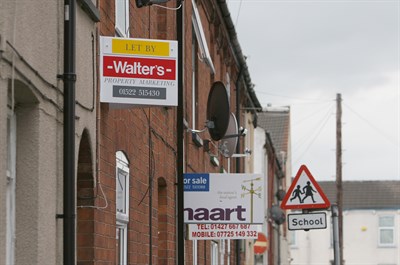 Average asking prices for newly listed homes rose by 0.8% (£3,023) in March to £371,042, reflecting the typical seasonal uplift as the spring selling season gathers pace, the newly released Rightmove House Price Index reveals.
However, the volume of homes coming onto the market remains unusually high, with the number of properties for sale at an eleven-year high for this time of year. The strong supply is limiting sharper price growth and increasing competition among sellers, many of whom are being forced to price more competitively in order to attract buyer interest.
Despite fresh global uncertainty following the outbreak of the Iran war, the UK housing market has so far remained relatively steady. The latest real-time snapshot of daily activity suggests the number of sales being agreed is just 2% behind the strong market seen at the same point last year and 5% higher than in 2024. Meanwhile, the number of new listings coming to market is running 3% below last year’s level but still 7% ahead of 2024.
Rightmove’s Colleen Babcock said: “March has brought a typical seasonal lift in prices, and ‘steady rather than strong’ is how I’d describe the start of this year’s spring market. With the number of homes for sale at its highest level for over a decade, buyers have plenty of choice.
“Many sellers are facing stiff competition and the longest average time to sell at this time of year since 2013. In this kind of market, being not only competitive on price, but competitive from the outset when setting an asking price for your home is critical.
“Our research shows that relying on later price reductions is a much tougher and less effective strategy when buyers are very price sensitive and have so many alternatives to choose from.”
Buyer demand had already been tracking below last year’s busier market, but there has been no further drop in activity since the conflict began, suggesting the immediate impact on the housing market has so far been limited.
Affordability remains a key factor shaping activity in what continues to be a highly price-sensitive market. Regional differences are also becoming more pronounced, with stronger annual price growth across the North of England, Scotland and Wales, compared with more subdued conditions in southern England.
There are also signs of opportunity for first-time buyers, with asking prices in the typical starter-home sector recording a small annual decline.
Babcock continued: “Market activity remains stable so far in March which is encouraging given the new global uncertainty over the last few weeks, though it’s too early to tell what may happen later down the line. That said, uncertainty is never helpful for market activity, and it’s come at a time when confidence and optimism would usually be building as the spring market gets underway.
“It’s understandable that many potential buyers may have one eye on news about mortgage rates and wider household costs. For context, the average monthly mortgage payment on a new purchase has increased by around £45 so far, but is still around £70 lower than it would have been at this time last year.”
Rightmove also highlight that mortgage costs have edged higher in recent days. According to the platform’s daily mortgage tracker, the average two-year fixed rate has risen to 4.51%, up from 4.24% a week earlier, as lenders react to the latest geopolitical uncertainty.
Matt Smith, Rightmove’s mortgage commentator, said: “A March Bank Rate cut is unfortunately no longer on the cards and any further Base Rate cuts this year look uncertain. There is, however, no forecast Bank Rate increase either in the view of the financial markets.
“The reason that mortgage rates are rising, is that swap rates, the underlying costs of fixed rate deals, take into account the view of Base Rate and they had priced in at least a 0.25% reduction in March and a potential of a second cut later in the year.
“The recent shocks that the market has seen due to the Iran war, has meant that lenders’ fixed rate pricing needs to change to reflect the Bank Rate remaining flat for longer.”
Source: Property Industry Eye


